Keeping Current – Best iPad Apps for Knowledge Professionals

Knowledge professionals live, prosper or die by their ability to keep current in their chosen fields. Besides your own knowledge niche, you need to keep current with events of the day that matter to your associates and constituents. A lapse in specialized or general knowledge reflects badly on you and may affect your ability to create value for your clients and associates. This is the fifth in a series of posts about using the iPad as a versatile mobile tool to accomplish essential knowledge functions.

We live and work in a mesh of people and information. Maybe there was a time when professionals just went to work and did their jobs. In these confusing, complex and rapidly changing times, important informal partnering and value exchanges occur constantly with our colleagues, vendors and clients. These major and micro-exchanges can make all the difference. But I digress.

This post begins the topic of Keeping Current and how you might best use an iPad to stay abreast of events and information in your field, your other areas of interest, your location and the world at large. Our focus today will be on News reading. My follow up post will finish up with Social News reading — with Flipboard leading the pack. Then I will get into reading after news capture with a discussion of reading apps like Instapaper and note/storage apps like Evernote.

Essentials of Keeping Current

Discovery. I want to be able to discover new news sources, authors and specific news items efficiently. I don’t know in advance what is going to be important. I want to be able to skim to sift through the new news.

Focus. I want to focus on the areas, sources and authors I find most interesting and valuable. This is in conflict to some extent with discovery but is equally important.

Diversity. Another value is that I want to see enough diversity in the news to get different view points that cause me to think and continue to refine my thinking and gain whole new perspectives and new concepts and knowledge.

Ways to Stay Current

There are many ways to stay current. Here are a few:

  1. Watching television news.
  2. Reading the morning newspaper(s) and weekly magazines via paper.
  3. Reading the morning newspaper(s) and weekly magazines via the internet or other electronic means.
  4. Creating your own aggregated set of news sources via RSS feeds and perusing the new entries that have come in since you last checked.
  5. Following news provided by those in your social or professional circles via means like Twitter, LinkedIn, Facebook and new apps like Flipboard.

I’m going to skip over #1 and #2 as the dominant traditional means of staying current that have been losing share to electronic, internet and app-based methods. Further, I’m going to only cover #3 briefly as I think these methods are imitative of paper publications and are still finding their way as new media. I don’t think the biggest value add is here.

#3 News and Magazine apps on the iPad

I don’t know whether we are just in the era of rampant ADD or what but it seems in the last 15 years since web browsing began, we’ve become a nation of skimmers and surfers. Somehow the genie is out of the bottle now and I’m not willing anymore to be a recipient of news fed to me in a canned way, however literate, from one publisher. I am no longer interested in relying on the New York Times to find out what is going on. But, I am interested in having a newspaper constructed on the fly for me based on my interests and drawn from many sources not just one. That’s now possible and I find it desirable and efficient. If you like these single publication apps, go for it. Some other top publications like the Wall Street Journal and The Economist may serve you perfectly, but there is this new alternative that I really like…

Zite: Combo Custom News App

The new way to read like before but better is via an app like Zite. It has sections like the New York Times but there are distinct differences. You can choose among Zite’s standard sections to create your own newspaper and you can add custom sections. For example, I have separate sections for iPhone, iPad, Android and Kindle along with standard sections like Politics and World News. I like being able to my favorite topics front and center.

Even better, with Zite, I can thumbs up and thumbs down different articles and then have Zite give me more of what I liked and less of what I didn’t. So, for example, my Philosophy & Spirituality (a standard section in Zite) has gradually evolved to give me more about Zen and less fundamentalist Christian pieces. The Politics section has shifted to the Left.

Besides this customization, Zite respects my preferences in another important way. I can send the articles I want to keep to Instapaper or Evernote or email the full text. Now, every publication won’t allow Zite to do this, but most will one way or another (sometimes they require you to go to their website first). I resent apps that restrict me to email the URL to myself, Evernote or a colleague. I know they have to make a living too, but still. Zite recently introduced an excellent iPhone version that is excellent for reading news on the small screen.

RSS Readers

In the early days of blogging circa 2003 – 2005, bloggers used RSS readers. This allowed us to subscribe to each other’s blogs and browse new blog posts from the blogs we followed. I’m still doing it and it still works well but I have to admit to also using Zite and in a minute I’ll be talking about social news apps.

RSS Readers Defined. For those who aren’t familiar with the term, an RSS reader allows you to automatically received new blog posts from any blogs whose RSS feeds you’ve subscribed. The most popular RSS Reader on the web is Google Reader. You use a free Google email account to use Google Reader and add subscriptions there. All you need to do is enter in the url for the blog you want to add to your RSS reader. You can add or delete from your list of feeds as desired.

The essentials that RSS Readers excel at are Focus and Diversity. You can flood yourself with a ton of feeds that cover many subjects that you care about (Focus), and by subscribing to a lot of different sources within each subject, you get diversity. However, one key aspect of discovery doesn’t happen as well. You don’t get new sources and new topics as much. We all like a new discovery so you may need to go to Zite or social news apps for that spice.

There are several really good RSS News Readers for the iPad and I have my four favorites: Perfect RSS Reader, Mr. Reader, Reeder and River of News. All draw the articles from Google Reader, the web site. I’m not mentioning some other RSS readers like Byline.  If you want a more magazine-like experience, you may prefer Pulse, Pulp, Read or Newstream.

It may very well be that the days of these more traditional newsreaders is numbered on the iPad due to the appeal of magazine-like presentation. Of these magazine-a-likes, I’m currently reading Newstream the most. I’ve used it to go straight to some of my tech favorites like The Verge, GigaOm, MacStories, Monday Note, TechMeme and AppleInsider and the Atlantic. There is a wealth of good apps here that are furiously competing with each other and getting better all the time.

Perfect RSS Reader - $2 regularly $5. Newcomer whose aesthetics I like. What can I say I like the antiqued look. I like the split screen with articles listed with descriptions on the left and full articles on the right. With lots of functionality available with discrete buttons at the bottom. My current newsreader of choice. But you really should occasionally check out the competition because you never know when one will jump ahead of the others. I own all four of these.

Reeder – $5. King of the hill until really good competition took note and copied and then elaborated on what Reeder had done on iPhone and then iPad. I still prefer Reeder on my iPhone which is where I think it still dominates the straight RSS reader category. Besides being classy and great at what it does and innovative. Reeder has an wonderful Mac app which I like when I’m taking a quick news break on my Mac.

Mr. Reader – $4. Uber Powerful. Perfect if you like a list with some description for each and don’t want the full article except when you really do want it. This can work well if you mostly read elsewhere which many people do. You skim here and just hit the arrow to move the winners to Instapaper or Evernote in full when publication allows it.

River of News – $2. I used this app for probably a year and really enjoyed 2 key features combined. I could just spin through the river of articles and I set the preference to mark them read as I went through them. That feature alone can be helpful if you want to actually get through all your feeds. Simple clean interface without the column on the side. Worth your $2 if you haven’t tried it and think it sounds like something you might like. Simplicity is appealing and I may come back home here one of these days. I sure haven’t deleted this app from my iPad.

Social News Apps

Twitter, Facebook and LinkedIn – we will save for part 2. Twitter is the originator of the short status update and is the winner for social news for the knowledge professional. Twitter consists of 140 character blurbs of information-laden content shared publicly for others read. This service has proven so valuable that it has been adopted in a lesser form as Status Updates by Facebook, LinkedIn and many others. Sharing links to blog posts and youtube videos is dominant and thus forms a source of news that shouldn’t be ignored.

Status Updates on Twitter and elsewhere and tools that stand on the shoulders of these tools is a large and burgeoning area that I will address as a separate blog post. For now, just keep in mind that keeping current can’t be complete without the use of these tools in some capacity. On the iPad, I would start with Flipboard.

Posted in Independent Knowledge Professionals, iPad Apps, Knowledge Functions, Reading | Leave a comment

Kindle Fire and Kindle Touch: Best of Both Worlds?

I am fortunate enough to own both a Kindle Fire and a Kindle Touch. In fact, I also currently own a Kindle 4 and a Kindle Keyboard (K3). I expect to shed two of them in the near future, but before I do, I thought I would write up my thoughts.

Reading is one of the essential knowledge functions that every knowledge professional takes seriously. The Kindle Fire is more than a reading device — reading may be a secondary function here, but I doubt it. Does it make sense to carry both a Kindle Fire and a Kindle Touch? Where is each at its best? I’ll talk about e-ink vs lcd screens for long-form reading – what are the trade offs?

iPad vs Kindle Fire

Does it make sense to get a Kindle Fire when you already have an iPad? I have both for the time being. The reasons I went for the Kindle Fire were (1) I thought I would like the 7″ form factor for holding while reading and also for its portability, (2) I’m an Amazon fan and had heard the Fire’s integration with the Amazon store was superior to iTunes,  (3) I was curious about how the other half lived – the Android side of things and (4) it was cheap ($200) to find out. Here’s what I found out.

It doesn’t make sense to buy a Kindle Fire if you have an iPad and like it (unless you share devices in a household). Unless you don’t use all of the features of the iPad and aren’t depending on iPad apps that aren’t available on the Fire (yet). Keep the following in mind in making this decision. One option is to replace your iPad with a Kindle Fire and sell it to those who gladly consider a used iPad.

  • Yes, the integration with Amazon is better than iTunes so it’s easier to browse and access books, music, TV shows and movies. If you love Amazon like I do, that may be enough.
  • However, the Amazon App Store has only 1% of what’s on Apple’s App Store. Lots of really good stuff (Instapaper, Index Card, Flipboard, Zite…) is missing. The selection is thin. This will likely change over time but, as an early adopter, I know it isn’t much fun to wait for something to get popular (developers take time to write apps and currently make more money going the iOS route).
  • The Fire lacks cameras. The 2 iPad cameras don’t add much except video chat.
  • The Fire lacks Bluetooth. This means you can’t use an external keyboard with the Fire which could be a big negative for some. With some driver software, a wired USB keyboard could work.
  • The Fire lacks GPS. This will make map apps less valuable and other local apps such as travel guides and restaurant recommendations.
  • The Fire lacks cellular. Amazon’s promising cloud support remains merely a promise when wi-fi is not available.

The deal breaker for me, though, is that the Kindle Fire isn’t much easier to hold than the iPad. It is easier to hold in one hand. But it is twice the weight and thickness of an e-ink Kindle. It’s a brick, actually. Keep reading, though, there is more to this story.

The Kindle Fire is a great deal for what you get compared to the iPad. The iPad is an excellent, no-compromise tablet and worth $500. But, the Kindle Fire is a better value. It’s a great starter device that you can experiment with, learn on, consume Amazon content from and get basic app functionality out of like taking notes with Evernote. It’s quite a bit smaller, though thicker than I prefer. It also has a few quirks because it was a rush job and Amazon got a deal from the makers of the RIM playbook which allowed them to hit the bargain $199 price point. Other apps that are on the Fire and help make it a reasonable app-using device are: Dropbox, Pulse, AP Mobile, The Weather Channel, Goodreads and the Kindle app itself. Of course there are lots of games if you want to go there. The screen is really good. The operation is simple and while a bit slower to respond to touch than the iPad, you get used to it.

E-Ink vs High-end LCD Screens

Lots has been written about e-ink and its virtues. To sum it up, you get an easy on the eye screen that works really nicely as long as you have good lighting. Outdoors tends to be wonderful. By a window is awesome. The e-ink screen doesn’t refresh all the time. Instead it refreshes when you turn the page. Because of that, the eye enjoys the rest and battery life is much better. This means a great big battery doesn’t need to be put into the e-ink Kindles but does need to be in the Kindle Fire and the iPad and iPhone, et al.. E-ink devices are light and thin and that is a really nice thing when you are reading. Some people buy a case or clip on lamp for their Kindles to get light when they need it since there is no backlight.

The heavier LCD-screen devices need to be set on a table, on your lap. They can’t simply be held up for extended periods unless you are a really strong and large person. So, for long-form reading — books that is — an e-ink device is nice. Except that backlight can be a godsend when the light in the room isn’t good. Second, you get color — really nice color. Your screen can respond really rapidly and be more interactive. When you read books that include lots of pictures like children’s books and textbooks, the LCD-screen devices win.

What if you already have an E-Ink Kindle should you consider the Fire? If you don’t have an iPad and think you might take some advantage of apps, the Kindle Fire has a lot to offer as a compliment to an e-ink Kindle. You are already covered on music with your existing Kindle. But you have more room for music on the Fire and then you have TV, movies, email and web browsing too. When conditions aren’t great for the regular Kindle, the Fire can be used to read in low light and allow you to view books and publications in color.

The Kindle Fire as your only eReader. Is that a good option? This might be an individual decision. First, if it is your only eReader, you don’t have to decide which device to bring with you. That’s nice. With my plethora of mobile devices, it’s difficult… Second, some folks such as Eolake Stobblehouse of eReader Joy prefers LCD to e-ink because of its better contrast and other virtues. I have a preference for e-ink in good lighting conditions and I love the light weight and slender profile of these devices for reading. However, I have a pretty good time reading on the Kindle Fire too. It is nice also, you just have to prop it up on your lap or something after a while.

What about the Kindle Touch vs. Kindle 4 and Kindle Keyboard?

I am going to keep my Kindle Touch and use it when the light is good as a superior dedicated eBook reading device. Reading is important to me. I need to keep up with a lot of reading and a chunk of that is book reading. I also like me a murder mystery from time to time and an occasional classic. Also, you can take the 7 ounce Kindle Touch with you without a strain even if you already have an iPad or Fire in tow.

Is the Kindle Touch better than the Kindle 4? For me I had a good reason to favor the Kindle Touch ($99 wi-fi only). I wanted 3G cellular ($149). I had purchased a Kindle 3 (now the Kindle Keyboard) with wi-fi only after having had a Kindle 2 which is a 3G-only device. I missed the always connected nature of the Kindle 2 so when buying the Kindle Touch I opted to pay a one-time charge of $50 to have lifetime 3G even though the 3G on the Touch doesn’t work for web browsing. I can use my iPhone for web browsing if wi-fi is not an option. I know the screen is small but it is a Retina display and I shuttle things over to Instapaper if I need a better reading experience. The prices for e-ink Kindles are with special offers. You pay $30-40 more to eliminate the ads which you can always do later if they bother you. I don’t mind them.

If you don’t like to highlight and don’t take notes, don’t use text to speech and aren’t all that curious about the new x-ray feature only available on the Kindle Touch, you should get the Kindle 4 for $79. Less is more if you don’t need this extra stuff. The Kindle 4 is lighter (1.5 oz.), smaller (a little bit) and generally delightful. I like all that extra stuff enough to tear myself away from the Kindle 4 which was my main Kindle between September and November when the Touch came out. And, even though the touch experience on the Touch is a bit laggy compared to the iPhone or iPad or even the Kindle Fire, it is touch and I like using my finger, to go straight to the words I want to highlight or selection I want to make.

I am hoping the software for the Touch will improve over the next few months — there are a couple missing features right now actually. You can’t turn the touch sideways to view pages in landscape, for example.

What about the Kindle 3 (aka Kindle Keyboard)? This is a darned good device and is full-featured minus the new touch capability, x-ray only available on some titles and the faster page turns in the Kindle 4 and Fire. You don’t need to upgrade. I did but I’m a technology consultant and have an excuse. The faster page turns feature of the K4 and Kindle Touch comes at the expense of a slight degradation on the screen as you go for a total of 5 page turns without a refresh. The Touch is still a little half-baked and if you are used to using the 5-way controller, it’s not a sure thing you’ll like the touch experience better (yet – maybe with software updates the touch will be the clear winner compared to navigating with the 5-way). Also, the touch doesn’t have page turn buttons. I wish it did (but I haven’t found touching the screen for page turns difficult or problematic in terms of fingerprints).

All of the E-Ink Kindles are Great and the Kindle Fire could stand alone as an eReader. Take your pick. I am not ready to give up e-ink, so I go with both. Also, since I have an iPad, I have a hard time keeping the Fire. I will keep it for now since I’m a technology consultant and like learning a bit more about Android.

7″ iPad

A cheaper 7″ iPad could be amazing. There’s a gap in the 5-7″ space that has invited competition from Samsung, Amazon and Barnes & Noble. A 5-7″ iPad would likely be just as fast as the iPad 2 and easier to hold. I imagine it to be an exact copy of the iPad 2, but smaller. It would cost at least $299, I’ll bet. I prefer the traditional form factor of the iPad over the wide-screen Fire which is great for movies but a little awkward for writing since a horizontal keyboard fills the screen leaving little room to see your text.

Kindle Fire 2

The second version of the Kindle Fire will improve markedly. Although there is a rumor of a 10″ Fire, the 7″ size is the one I will follow. The 10″ is already dominated by iPad and I like the 7″ size which will get lighter and thinner gradually. Amazon will be able to hone it like they’ve honed the e-ink Kindles over the generations. Amazon has shown they care about design. And they’ve learned that price matters so Amazon will stay well ahead of Apple in the value department and will likely continue to build out their iTunes-beating cloud-based media services.

That’s it for this year of 2011. See you in the new year! All good tidings.

Posted in Android, iPad, Kindle, Knowledge Functions, Personal Technology, Reading | 3 Comments

Writing on the iPad, Part 2 – Rich Text Options

This is part two of my inquiry into the current state of serious writing apps for the iPad. For most iPad-toting knowledge professionals, I would recommend my favorite Dropbox text editors as a good but stopgap option. I explain the advantages in that post. I also mention that rich text is more fun at minimum. If you are so inclined to make something bold as you are writing, you should be able to do that. We’ve come to expect this and for good reason.

Unfortunately, rich text options on the iPad are still limited. The main two places to find some rich text editing on iPad is in Word Processors like Pages and the Word options in Office compatible apps like Documents to Go and in a some Notebook and Note-taking apps. I will cover my favorites.

Mail

Just a quick word on Mail. In iOS 5, Mail received the ability to bold, italicize and underline text. Yay for that. A little bit of rich text creeping into the iPhone and iPad. Rich text has a future, it’s just a little slow in rolling out.

Traditional Word Processors

Time is running out for the traditional word processor. We don’t write documents all the time anymore. We don’t write letters. Word Processing was designed for paper communications which are gradually dying out. However, the alternatives that are growing up to take their place are rarely as powerful and full-featured.

This option is especially useful to those who have a predilection for Microsoft Word or Pages on the desktop. It is not uncommon for computer users to use one application for almost everything. You have an application you are comfortable and competent with and tend to look there when attempting to do something with a document. That’s not a bad way to go although sometimes you’ll be trying to use your tool of choice on projects that don’t fit very well…

Pages is available on the iPad and there are several Office compatible apps that include Word-a-like functionality. Let’s take a look. All of these will give you rich text capabilities.

Pages ($10 – #3 Top Grossing iPad app). If you are already using Pages on your Mac, Pages on the iPad is the first place you should look for a word processor. Pages for iPad is much less powerful than Pages on Mac but it is more powerful than any dropbox text editor by a country mile. And it looks good and feels good to use. If you haven’t already bought Pages, look and see if it has the power you are seeking. The main drawback to Pages for iPad is that it doesn’t support Dropbox or other options besides iCloud. If you have gotten up and running with iCloud, this is your best bet.

The promise of iCloud is transparent syncing from Mac to iPad and back. I haven’t read enough manuals yet to be assured that iCloud is safe yet. If you have MobileMe, multiple Apple IDs and generally are dragging your feet regarding the still largely unproven iCloud, you will be stuck using iTunes to get documents from Mac to iPad and back. It works but is clumsy compared to Dropbox options. When iCloud just works, it will reign supreme.

Office-a-likes. There are three leading Office-compatible apps on the iPad with variations: Documents to Go Premium ($19 – Word 2007, 2010 only #18 on Top Grossing iPad app), QuickOffice Pro HD ($20 – Doc & Docx #13 on Top Grossing iPad app) with Office2 HD ($8 – Doc & Docx) lagging behind. These are a little more expensive and I have not purchased any of these so I will bottom line what I’ve garnered in my research online. Documents to Go is the most Office-compatible but probably the least Mac-like. QuickOffice has the best user interface among these but slips down a notch in compatibility. Office2 HD is somewhere in between.

This is a bit of a pick your poison situation. If you must be compatible you are least likely to get an unpleasant surprise with Documents to Go which has a special capability that carefully preserves your desktop Office documents in full. QOPHD and O2HD sacrifice a little in compatibility for other virtues. Pages also opens and saves to Word format but will omit features in Word that it doesn’t understand. Don’t use Pages, QO or OHD2 to edit any but the most basic Word document created on the desktop that will get distributed as a Word doc.

Notebook & Note-taking Apps with Rich Text

Since we’ve already run out of options for word processors that can do rich text, the next stop is Notebook apps that can do Rich Text. I’m going to limit our discussion to notebook apps that are oriented towards allowing you to write something that resembles a document as opposed to putting in text boxes when you want to type (these are more like working in page layout mode – better for notes than more serious writing projects I think). These notebooks will flow the text and assume that text reigns above and beyond other objects which might be inserted.

OK. We are are simply writing here anyway, so does it matter whether you write in a word processor? Maybe it is OK to write in your notebook where you’ve put everything about this topic including images, web clips, your random notes, outlines, the works.

Keep in mind that you need to be able to get that writing back out of your notebook when you publish or distribute it in some way or other.

Evernote (Free). Just recently, Evernote for iPad has added the ability to edit notes and use rich text fairly extensively including bold, italic, strikethru, underline and the unexpected: highlight! You also get numbered lists and checkboxes. And Headings, Subheads, Paragraphs and Blockquotes. These are web-oriented but the web is a big piece of the action these days. Kindle’s new eBook format for the Kindle fire is HTML-based and ePub docs are full of HTML as well.

Evernote allows multiple notebooks and can be used free with lots of storage possible. Freemium  is done right. You are induced to upgrade with extra features, but the free version works really well on its own.

I did find some difficulty getting my rich text out of Evernote on the iPad. I found that if I synced the formatted text note to the cloud and opened the note on my Mac, I could copy and paste it into textedit and get rich text just fine with the exception that checkboxes for to do items did not come over. However, I couldn’t get rich text to paste into the iPad version of Pages.

I’m overall impressed and see Evernote for iPad as a viable rich text writing app. Evernote has gotten a huge amount of funding this year and looks like a really nice product with a great future. It is awesome for notes and support of multiple devices plus any web browser.

Circus Ponies Notebook ($30). Notebook supports rich text and has from the beginning. It is an alternative that has more bells and whistles than evernote including diagramming, scribbling, audio recording and outlining and colored text (actually, I like Evernote’s highlighting better but that’s a personal preference).

Circus Ponies Notebook is just beginning to hit its stride. It’s such a powerful app that it needs a lot of work to make all that functionality user-friendly by touch. At the price of free, Evernote is easier to like and recommend. On the other hand if you love the Mac version of Circus Ponies Notebook, you’ll be really happy to be able to bring your amazing notebooks with you on the road and around town.

All Purpose Writing Tools

Scrivener. This is a small category right now. I love Scrivener for Mac as an all purpose writing tool. It has outlining, index cards, rich text, supports markdown and much more. Unfortunately, Scrivener isn’t available on the iPhone or iPad. However, the makers of Scrivener, Literature & Latte have just announced a new project to bring Scrivener to iPad and iPhone in 2012.

Storyist ($10). In the meantime, a similar product dedicated to fiction writing does exist for iPad. It has outlining, index cards and rich text right now. Storyist has a Mac counterpart as well and really does best when used with the Mac counterpart which has more power. As a specialized writing app, Storyist is impressive. I bought it and hoped to twist it a bit to work for non-fiction. I’m sure it can be done but it looked to be difficult.

If you write fiction check out Storyist as an option and keep an eye out for Scrivener. I would guess it will be the latter half of 2012 before it shows up.

Posted in Apps, iPad Apps, iPhone Apps, Mac Apps, Writing | 1 Comment

Writing, Branding and Mining for eBook Gold

If you are an up and coming independent knowledge professional or an old-timer at the INKNOP game, you have good reason to be creating, giving away and selling information products of various kinds.

The new information product on the scene is the eBook. It used to be that you would write a book about something and invent yourself as the expert in your field. I’m not sure what percentage of independent knowledge professionals actually write traditional books, but it’s probably a significant chunk. It’s a bear to write a book though, especially one of any quality that would reflect well on you. Getting it published aint easy either.

But, that problem just went away. We now have eBooks, eReaders like the Kindle for $79 and millions of iPads, iPhones and other smart phones that are hungry for content.

Almost overnight, there’s a rush of eReaders and Amazon is selling more eBooks than they are paper books.  The times they are a changin’ and we are lucky to be here now to take advantage of this white hot phenomenon.

I Bet You Have an eBook in You. If you are one of the vast numbers of people who think you might have a book in you, you certainly do. Right now, while ebooks are still in short supply and eBook readers are the rage, is the time to get your foot in the door.

Books vs. eBooks. The key distinction between eBooks and Books is that (1) there’s no publisher gatekeeper at the door and (2) eBooks can be short as in the 10 to 50 pages you may have written in school! You already know how to write something of this length and no one is stopping you.

You need to start writing and publishing them so that you can create a name for yourself, show people what you know and how you think about things. You might even make a couple nickels to rub together, but I’m not sure about that. You’ll have to be in the right place at the right time to do that – not impossible.

I’m thinking of this ebook writing operation as a means to an end. It’s writing. It’s creating content. It’s creating programs. Knowledge that can then be delivered in lots of ways, some of them in person as consulting, training and other more expensive kinds of services.

But, who am I to talk? I have created some little trial-run eBooks but am still learning how to create them. Meanwhile, the explosion of eReaders, eBooks continues and more and more people are getting comfortable reading digitally. I consider my blogging here at Independent Knowledge Professional a content development effort that is a precursor to some related eBooks.

eBooks are Changing Right Now. The only thing holding me up so far is this jumbled stage we are in relative to eBook formats. The ePub and Kindle formats are clearly of some importance with Amazon behind the Kindle format and Apple, Barnes and Noble and others using ePub. I’m not crazy about the options we have right now because ePub and Kindle formats are so primitive from an aesthetic point of view. There has to be a better way! PDFs at least give you a way to make a document look great if you know what size it needs to be.

eBook Formats. In some ways eBook formats make tons of sense as we read on our computers, our tablets and our phones interchangeably. But Amazon has declared a new format for its Kindle Fire that bears little resemblance to the previous Kindle standard. I expect to see a rush of different formats and hopefully decent end-user formatting tools over the next year.

DIY. As an INKNOP, I want to be able to format my own books just like I’ve been formatting letters and reports over the years. Why should I suddenly have a big learning curve hurdle and hassle to simply get a digital report called an eBook out the door?

If you want a new career and identify as someone who likes to write, you could be one of the new experts in this eBook creation field. We need you now! I know lots of people who are ready to write something if the hassle of formatting the eBook and getting it into the Kindle store could be made to go away. The only warning here may be that when a decent end-user eBook creator tool shows up, INKNOPs may go back to DIY.

The last thing you should be right now, though, is discouraged. We need to persevere and do eBooks, it’s just too logical for independent knowledge professionals to show off and trade on their specialized knowledge. The eBook can be of just about any length which means you can make one quick.  If you aren’t attached to being in the Kindle store (something worth doing when you can), you can make PDFs today and give them away as an incentive to your prospective customers to sign up for your eNewsletter or subscribe to your blog. Just like blogging, writing eBooks is good writing practice and helps you clarify your thoughts. And, once written, these digital items can be repurposed and reconfigured as handouts for presentations or other eProducts.

I work every week with another INKNOP, Mike Van Horn, on cracking this eBook world open so that it takes us both where we want to go on our way to INKNOP success. We explore this space, identify people with skills to help us and brainstorm to learn what we need to know.

Posted in Blogging, eBooks, Independent Knowledge Professionals, Marketing, Writing | 2 Comments

Writing on the iPad – Top Dropbox Text Editors

If you have been following along in this series, you know that I’m on a quest to see how the iPad can be best used as a tool for the knowledge professional. Aspiring professionals such as students should consider themselves included. I want to focus on writing in the next few posts. This post includes my detailed comparison chart for the top 4 dropbox text editors for iPad.

Dropbox. As any iPad owner knows or learns quickly, Dropbox is an essential tool in getting files on and off one’s iPad. There are alternatives to Dropbox, but it’s become the gold standard for allowing you to access the same files from both your computer(s) and your mobile devices like the iPad and iPhone. The Dropbox part of Dropbox Text Editors refers to this common trait of my top contenders here.

Plain Text vs. Rich Text. If plain text is not your thing, don’t worry, a future post will look at rich text options which unfortunately are few. The reason we have all these plain text apps on iPhone and iPad is that iOS doesn’t have a rich text feature baked in for third party developers. Apple rolled its own rich text when making Pages and has now added some minimal rich text in its latest version of Mail for iPad. We’ve grown up using rich text and many of us like and prefer rich text. I myself prefer rich text and would use it on the iPad if all apps on iPad and Mac also used rich text. But that’s not the case. Plain text is spartan but has its virtues.

Text Editors. The iPad apps I’ve chosen to look at today share a limitation that can be viewed as a strength: they all work with plain text only. In this multi-device world we find ourselves in, plain text is the lingua franca that allows you to copy and paste and use your written words in multiple apps on multiple devices without worrying about file formats and conversions. Loss of formatting is repaid in hassle-reduction and focus. The group of iPad apps I look at today all have distraction-free modes that let you focus on the words and sentences and delay formatting considerations for later.

Writing App Evaluation Criteria. I may do a blog post about the criteria themselves but for now, I’m just going to tell you what I think are important and what I’ve used here.

  • Key Features for the task: Searching, Sorting and Saving
  • Workspace Customization Options: Text and background color, Font choices and other tweaking possible to get your writing environment the way you want it.
  • Export Options: Some apps can only email the document as part of the email, others can create PDFs for you on the fly, create attachments and more. These extra options can save you time and trouble.
  • Design. How simple and beautiful are the controls and workspace?
  • Documentation. Most iPad apps have little to no documentation. None of my favorites have as much documentation built in as I would like but there are differences.
  • Checkbox features. There are many features that all of these apps have and I’ve listed those as √. If an app adds something special, I’ve given them a √+.
  • Reliability. This is a tough one to evaluate and probably changes over time. Something you should consider and be concerned about. Luckily, dropbox has its own snapshot backups so, you should be able to save yourself if one of these writing apps erases or copies over your document in its attempt to keep your documents in sync.
  • Wonderful Extras. At the top of this list is an optional extra keyboard row for the on-screen keyboard. Two of the 4 apps here have really strong implementations. Elements has a great Scratchpad feature. Link detection can be a nice touch so that phone numbers, addresses and URLs are hot and thus allow you to navigate or dial with them.
  • Markdown Support. Markdown is a simplified way to add HTML features to plain text without making your writing look like HTML code. It allows you to create headings, subheads, bold and italics and other formatting. You don’t see the formatting live, but these apps let you preview your work to see what it will look like in HTML. If you never blog (I hope you do if you are a knowledge professional), you won’t care about this.
  • iTunes Stats. We just as well see what has occurred on iTunes in terms of ratings and numbers of reviews. These stats can be gamed, so reading the actual reviews is often more useful. I’ve done some of this in addition to reading reviews elsewhere on the web.

The Top 4. Right this minute, I would say the top four contenders in the dropbox text editor category are Nebulous Notes, Writeroom, Elements and Notesy. There are probably 30 apps in this category but these stand out. Keep your eye on Writing Kit and Notely as dark horse candidates. They are newer entrants that might compete with any of my favorites. I’ve illustrated my detailed comparison below. Pay particular attention to high ratings and missing features. I’ve made some high, low or missing features red to draw your attention. After this chart I summarize strengths and weaknesses in writing.

After this chart I summarize strengths and weaknesses in writing.

Nebulous Notes. The Dropbox Text Editor crown goes to Nebulous Notes in this round. But your mileage may vary. The app store likes this app best. It’s customizability and feature breadth are unparalleled. When you make an app really powerful, your problem is going to be making it all look nice. As a minimalist, Steve Jobs would not have preferred this app. The UI is not as sleek or stylish but has moved from really geeky to adequate. I give the Nebulous team credit for delivering so much functionality and finding ways to make it manageable and quickly accessible. Best feature besides the incredible and optional scrolling, customizable extra keyboard row is file management in dropbox. You can do things in dropbox that can’t be done in the dropbox iPad app itself. View in iTunes

Writeroom. Finally in August, Hog Bay Software (Jesse Grosjean) released Writeroom for iPad. And it is a killer app! Writeroom for iPad is a universal app and does some great things to deliver a ton of customizability and features while maintaining a simple interface. There’s a really full-featured Advanced settings page that hides all the options away so they can be set and forgotten. The reason Writeroom is not my top pick is that it completely lacks Markdown support (which you may not care about) and doesn’t have as powerful file management as Nebulous Notes. View in iTunes

Elements. This is the first of the two more stylish plain text writing apps. If style trumps function, one of these may be your favorite. However, in the case of Elements it has one killer feature that you may decide trumps the more comprehensive functionality of Nebulous Notes and Writeroom: the Scratchpad! You can keep extras or reference material here. Elements is one of the underdogs that we want to stick around so if you like it, use it! Elements has a great icon, a clean look and a dedicated developer who keeps the upgrades coming. View in iTunes

Notesy. The other stylish text editor in our review today. Notesy has minimal documentation which is a sore point for me that I’m sure will eventually be corrected. It looks great and is a really nice writing app. You get lots of options to customize your workspace to your liking. Excellent search of files and inside files including support of regular expressions which is a technical way to search that is like what you can do in Google searches matching patterns. Notesy also gives you a lot of flexibility in how Markdown is handled and can automatically convert Markdown to HTML. View in iTunes

Other Dropbox Text Editors.

Writing Kit. My favorite alternative has a built-in web browser to facilitate research. If you often do research when writing on your iPad, you may especially appreciate this app. It has a fantastic extra keyboard row for Markdown formatting. The author has written a browser app so kindly just built it into Writing Kit. It also supports outline navigation to some degree. If you aren’t a Markdown fan, though, you probably don’t want to go here. And, this is a pretty new app so some caution is advised – there may be a kink here and there that could affect reliability as the app refinements and additions are rolled out. View in iTunes

Notely. This is another stylish app which hits all the checkboxes. So, a little more feature coverage than Elements and Notesy with just as much or more style. This again is a newer app so a little caution is advised but also watch this dark horse. It is on the rise. View in iTunes

Next time out we’ll look at the rich text writing apps.

Posted in Apps, Independent Knowledge Professionals, iPad Apps, Writing | 5 Comments

Blogging Do’s and Don’ts for the Independent Knowledge Professional

I’ve been blogging for eight years now and have gained some insight about it along the way. If you are starting a new blog or haven’t yet found the success you have been looking for with it, here are a few things I would advise you as an independent knowledge professional.

#1 Don’t put Google ads on your own site. You are already advertising yourself. Don’t junk up your page and drive anyone away to make a tiny bit of money.

#2 Don’t let your own offers clutter your page and diminish the value (and brand). From a marketing perspective, blogging is first and foremost showcasing you as an independent knowledge professional. Building your subscriptions and mailing list is valuable but secondary. Don’t detract from the main event with your requests from the sincere visitor who is either there to read a specific post,  trying to solve a specific problem or learn something or is actually shopping to hire a consultant or knowledge professional like you. Smaller unsolicited positive outcomes could be a subscription, a Facebook, LinkedIn, Google+ or Twitter update  about your post or blog or about you. The art here is to find a way to make information available about other desired outcomes you might like — like getting a subscription or new mailing list entry — without harming and distracting from the value you are providing, or worse, annoying someone.

#3 Showcasing you is a byproduct not what you want your visitor to experience. The visitor needs to experience value as promised in the about page, post titles and categories. Yes, disclose information about yourself in the about page and in your posts as a way to add value. The reader can better interpret your posts if he or she knows where you are coming from.

#4 Discovery. The marketing value of your blog comes first in discovery. If you gain a readership and begin to rise in Google searches from people who may eventually want your services, you win. People find you and you don’t have to go out blindly trying to find them.

#5 Brand-building. This is simply building your reputation as a knowledge professional by means of showing your stuff on your blog. It’s a freemium strategy. Some will subscribe to your RSS feed or mailing list. People who like your blog may tell others and spread the word via social media or on their own blogs. Some of those who like your posts may like what you have to offer enough to buy an ebook from you. If you do trainings or seminars, some may want to pay to attend. Some may contact you about a possible engagement.

#6 Quality over Quantity. We are all busy and the temptation is to just get a blog post done. Short is fine. Personal is fine. Low quality, half-assed efforts, not so much. Truly mediocre posts are not noteworthy enough to get word of mouth, links or anything else. It doesn’t reflect well on you. SEO tricks could juice up a blog with subpar content, but would you ever get a good client that way? Infrequent posts of quality are preferable to regular banal posts.

#7 Fans. If, through your good works, you develop a sympathetic and appreciative following, your fans might help you in return when you launch an important initiative like an eBook or new seminar.

#8 Colleagues. Information sharing. Your fellow travelers with interests in common can be good company and can contribute to your thinking. Who knows? They may link to you.

#9 Informal Partners. Informal, occasional light-weight partners or even a great associate or employee could be a desirable result for you. You may get approached regarding some kind of complimentary cross-referral or other cooperative undertaking. Some of these may be useful and worthwhile.

There are lots of other benefits and I’m sure a few more pitfalls to watch out for. I hope something here will help you get more out of blogging. It’s actually pretty easy to blog when your goal is just to share what you know for free. The pressure is off. Have fun with it!

Posted in Blogging, Independent Knowledge Professionals, Social Media | 2 Comments

Waterfield MacBook Air 11 Smart Case with iPad 2 Tucked in

Waterfield Smart Case for MacBook Air 11 with iPad 2 on top

In my previous post about the MacBook Air 11 and iPad 2, I mentioned that I had found a great Incase bag that will comfortably carry both the Air 11 and iPad 2.

The Smart Case from Waterfield has a different use case or two. I got the Smart Case to protect my MacBook Air in my backpack in case I fall or drop the backpack somehow. The Smart Case weighing 12 ounces is a nice compromise between weight and protection – providing a lot of protection for your Air.

Once I got the Smart Case though, another use appeared. I can carry the case by itself on Sunny days when I don’t need quite so much room or compartments. The Smart Case has one large flexible fine net pocket on its side. Cables can go easily here. If you don’t need cables or adapters, though, you can slip an iPad 2 into that pocket. It fits perfectly! Of course, protection on the back side of your iPad is not great, but that’s the back side — the front is protected by the whole Smart Case.

Now, normally I would reserve a bag of the quality and price ($79) of the Smart Case as a special occasion item. However, I am a devoted Waterfield bags fan and own many of their other products and find them incredibly well made. Waterfield’s service is ridiculously great. They are even based in SF which is a nice plus. I needed to get some kind of fitted sleeve for my new Air 11 and this is over the top functional, luxurious and protective. Watch Gary’s demo video about this bag and you may be convinced as I was.

Posted in Accessories, iPad 2, MacBook Air 11 | 4 Comments

CEO Steve Jobs Exits – Filling Steve’s Shoes

I am a huge fan of Steve Jobs. He has taken some of the best dreams the computer industry has had and made them real – in fact enhanced them further. He’s made amazing technology available to the Masses. He has delivered on his goal to change the world. And then some.

But now Steve has kicked himself upstairs to the Chairman position where I think he will stay until death do us part. My impressions are that his health is failing and he must cut back severely to stay alive at this point. Barring a miracle, the end is near. So, what happens to Apple with Steve’s role further diminished?

First of all, I don’t see a successor to Steve Jobs anywhere at Apple or not at Apple. At Apple, Steve has been gutsy, bold and tireless. He has been idealistic but practical and committed enough to actually fulfill on those ideals. That’s a great human to emulate. He has also been a flag bearer for a vision of technology + art and humanities.

The problem for us, not so much for Apple, is that some of the things we’ve loved about Apple products may be diluted as Steve’s influence subsides. Values like excellence, aesthetics, design, minimalism and innovation may suffer without their strongest exponent – how could they not? Although a great man in his own right, Jony Ive isn’t going to be able to champion these values as well as Steve has done. If there is one more thing for Steve to do, it is to find that someone that can fill the gaps he will leave at Apple. All the other pieces are there right now. Apple is unstoppable – short term.

The Steve-sized hole I see at the future Apple is in these intangibles — we need an insanely great advocate who can go against the temptations to play it safe. For example, minimalism a la Dieter Rams’ ten principles, is bold. It is placing your bets and going for it. You don’t get little failures that way, you get big ones when things don’t go as planned.

When push comes to shove, Steve would stand in the fire and find that bold place. He has kept calling for redoes of various products well past the point anyone I’ve heard of would just say, we’re done. That’s a print!

But Steve was not cavalier or reckless. Look at that cash stronghold Apple’s got. Far from it. Steve has just been unwavering in his vision and commitment – and it paid off. Two of Steve’s greatest talents have been to (1) find and hire awesome people to work at Apple and (2) to inspire and cajole those talented people to work in tandem to accomplish great things. I would think a big part of the draw at Apple is to have this opportunity to change the world and work on cutting edge products. These people are still there and they are there not just for Steve.

We have the incredible people. We have a Steve-shaped hole that is only partially grown. I want Tim Cook at the helm right now. Stay there, Tim. Short term, I would like to see a CEO-wannabe arty, design kind of person developed within Apple’s midst or hired from outside (there are probably 10 of these or more at Apple right now) and brought onto the executive team asap. Maybe this person just helps make up for the hole. He or she doesn’t have to be CEO necessarily. But this person needs to make it easy for Jony to keep doing his thing at the level he’s been doing it.

My Stevie J man or woman would need to be a leader. Would probably need a pretty great track record. How do you fill this hole? As they say, though, when one door closes another door opens. Our whole world has learned from what Steve and Apple have wrought. For all I know, generations will be affected by these values. There are an awful lot of Apple fans. Look at China’s adoption of the iPad of late.

Don’t in any way consider this to be a negative opinion on Apple’s short term prospects. How can they lose? I’m hoping MG Siegler’s idea about Steve’s One More Thing comes true this fall. And, no one has written better and more insightfully about all this than Jean-Louise Gassée in his recent Monday Note: Who’s Going to Protect Us from Cheap and Mediocre Now?

Posted in Apple, iPad, iPhone, Personal Technology, Steve Jobs, Trends | 2 Comments

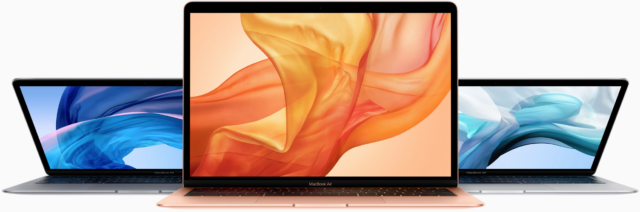
MacBook Air 11 + iPad 2 – Best of Both Worlds

My new MacBook Air 11 and iPad 2

I am writing an in-depth series of blog posts about iPad apps for knowledge professionals right now and I am nearing the half-way point. Along the way, I’ve decided to buy a MacBook Air 11 to compliment my iPad 2. I specifically got the MacBook Air 11 as my primary Mac and as a mobile device I could carry with my iPad 2 which I won’t leave home without. Why both? That’s my topic today.

Torn between Two Lovers

The iPad 2 has become indispensable to me. It is truly enjoyable to use, is the least onerous computer I’ve ever encountered. There are apps on there that are better than any Mac app, take Thinkbook, for one of many examples. I also tote an iPhone 4, but that’s a given. One might think the iPhone 4 + MacBook Air would be enough, but the iPad screen real estate makes for lots of apps that don’t exist on iPhone 4.

I have been a MacBook Air owner since December 2008 with the 128gb SSD 2nd gen model. As soon as I experienced the ease and freedom of using the 3 pound Air and the instant gratification of the solid state drive, I was hooked. Within a week or two, I swore not to ever buy a full-sized laptop again. My previous main Mac was a 15″ MacBook Pro but I was willing at that point to sacrifice CPU speed and screen real estate for human-friendliness even then. I already had a 24″ iMac when I bought the Air and kept my 15″ MBP as a backup. Except for using the iMac as a place to hook up extra external drives, these machines have gotten less than 5% of my time ever since.

I work out of my home as a self-employed computer/technology consultant and FileMaker software developer with my own software product. I don’t need to visit clients very often. I can work wherever I have a computer. In my case, FileMaker Pro development must occur on a Mac or PC (Mac!). The iPad and iPhone versions of FileMaker, allow access to FileMaker data but not development work. My colleagues and clients work with me remotely most times so I like to get out to my local cafe every day. I combine that with an exercise walk downtown and back through Tiburon’s St. Hilary’s Preserve Open Space.

New MacBook Air 11. Even though I already had upgraded to the MacBook Air 13 2010, everything clicked into place when the new Air 11 came out in July when Lion was released. The 2010 Air 11 was a little underpowered I thought but the new Air is extremely fast, so no complaints there. Carrying both the Air 13 and iPad 2 was a bit heavy for my daily walk downtown so I usually took the iPad 2 and left my Air 13  and a lot of my professional work options at home. Until now. The new Air 11 is a potent Mac whose only limitation is its 11″ screen. Lion seems built for that small screen with its new fullscreen mode. In Lion, fullscreen apps have extra features and work great swiping left or right to change to different spaces — each full screen instance gets its own virtual space.

iPad is in Transition and Still Benefits from a Mac. Yes, the iPad 2 is a Post PC device, but writing my series on using it as a knowledge professional put its current weaknesses front and center. I decided lack of a Finder and the necessity to use Open In… to move documents and images around is a pain right now. Yes, I do it with the aid of Dropbox, but I don’t like doing it. It is laborious and any other creative task tends to run into the limitations of the siloing of iPad apps when compared to the seamless experience on a Mac when doing the same thing. This must change, and meanwhile I want to enjoy the iPad to the full in its current state with its incredible new apps more compelling and varied by the day.

Tiny Incase bag can hold Air 11 + iPad 2 + Kindle 3

Carrying Both iPad 2 and Air 11. The day I bought the Air 11 (August 20), I also bought the $59 Incase Nylon Sleeve bag (I see the 13″ version on sale for $29 at goincase.com. It’s really well-made, small, very light, and has some nice extra pockets for cables, wallets etc.. This bag will also accommodate my iPad with a little help from a minimalist sleeve around it so it can slip in right beside the naked Air 11. I got a $19 suede jacket leather sleeve from Waterfield bags (sfbags.com). The Incase bag is super-padded so the plan worked! I can actually carry my MacBook Air 11, iPad 2 and Kindle 3 in this bag – putting the Kindle 3 naked in the full-length outside pocket. Pretty amazing when you want everything with you on the road in a compact, good-looking bag. The removable shoulder strap is to die for. The fold-away handles are great when you don’t need the shoulder strap.

How’s that 11″ Screen Working for Me? Sometimes it feels a bit small, of course, but mostly you just use it and it seems just fine. The mobility and comfort compensate and make up for the small decrease in screen space. If you already have an iPad and regard it as an essential part of your kit bag, you too may find the Air 11 it’s best companion.

The Shrinking Laptop. As a computer professional, I won’t be abandoning the Mac any time soon. But, devices like the iPhone taught me that I could get an amazing amount of work done on an iPhone (I bought it on day one: June 29, 2007). Then the iPad, with it’s larger canvas showed how helpful a little more room is. But these devices reduce one’s tolerance for bulky devices that are heavy. In an always connected world, you want your devices more mobile. In a digital world, you are using devices more and paper less. You need devices that are more like paper. The Air 11 is the most paper like PC available and it is a very powerful Mac!

Maybe the iPad will do it all Soon. The imminent release of iCloud may make the Air less important because it will allow better file access but a lot of the ease there will depend on apps being modified to support iCloud’s new features. This process will take some time to play out. I’ll still need the Mac to develop on FileMaker – at least for a bit longer (who knows what future versions FileMaker Go and FileMaker will bring). And my favorite all-purpose writing tool, Scrivener, doesn’t seem ready to release an iPad version just yet. I didn’t want to wait, and this new Air 11 will be long in the tooth before all the pieces of Apple’s strategy mature. Meanwhile, I’m having a fantastic time with my portable office.

Posted in Independent Knowledge Professionals, iPad, iPad Apps, Mac Apps, Personal Technology | 2 Comments

Knowledge vs. Productivity Apps

I fall into the ardent minority who is pursuing using the iPad as a vehicle for productivity and knowledge. Rightly, the iPad has been described as a tool for consumption first and foremost. It’s fantastic for consumption activities like reading of all kinds, viewing video and playing games. It’s great for your leisure time, no doubt.

I’m a computer enthusiast and professional so I see the iPad as a new kind of computer. We’ve known for a very long time that a lot more is possible with a computer beyond typing on a keyboard and staring into a screen for hours sitting still. We’ve known that handwriting recognition, voice recognition and control are possible and being worked on. We’ve seen Minority Report with all the handwaving and now the Kinect. And Apple has had two blockbuster products that allow you to throw things around on a tiny or book-sized screen with your fingers. So, to me, what’s happening with the iPhone and iPad and their competitors is exciting and great to see.

The computer is the possibility machine. And something I do with it is work. I work for myself so work and play do kind of blend together. I work for clients but I also do things like this blog that are a bit more aspirational. Maybe there’s some work related to my most passionate interests out there that will find me blogging about this stuff.

I love computers so the first thing the iPad represents to me is a really tiny computer that packs a punch and is incredibly portable. It happens to run iOS and iOS is still discovering what it’s going to be when it grows up. So, I am not willing to think of it as a mere entertainment device even if it is extraordinary and surprising in that area already. I see it as a device that should be able to do anything any other computer has done one way or another. We’ve already seen keyboards that are created by shining a light on the table your are sitting at and typing on it. We’ve seen glasses that can display a huge screen relative to its distance from the eye. Why would I not be able to work with one of these things — with or without a keyboard?

Enough preamble, now let’s look at work from a knowledge professional’s perspective. I think of independent knowledge professionals as the new experts, consultants, advisers and publishers. The new part of it is that experts now kind of blend in with normal people who are passionate amateurs. I’m not an expert at the subject of independent knowledge professionals if a degree in IKP is required. But I am an IKP and have been for 25 years. And I’m the curious type. I do have a couple Masters degrees – one in Sociology and one in Business. Academia and other official institutions grant credibility but now we are realizing that amateurs and people who make this stuff up can be interesting and do valuable thinking too.

There’s this big knowledge component. It doesn’t hurt to be productive either. I like the knowledge piece more than the productivity piece so that’s mostly what I will talk about on this blog. I won’t talk much about traditional business disciplines like accounting, finance and marketing (maybe some marketing since it is intertwined with the web and internet which continues to change our world in dramatic ways). I’m interested in knowledge apps. They help you understand your world and figure out where you fit. They help you think, write, learn and articulate.

For a minute I’ll talk about productivity and productivity apps to make this distinction. Productivity has to do with efficiency. At its higher levels it has to do with effectiveness. Knowledge helps figure out these two kinds of virtues and how to get more of them, but it is more about the discovery and insight than the practice. Productivity is the getting things done. The work flow. Utility Apps may have productivity and knowledge aspects. The To Do apps exemplify productivity apps in the extreme. Pert charts and project management. List-makers. These can be awesome, but I like the less practical apps that lean towards knowledge, insight, analysis, creativity, expressiveness. Maybe a bit less about quantity and more about quality.

Apple aspires to blend Science with Art. The computer is the bicycle for the mind, Steve Jobs used to say. I think like that. I want to be delighted and enlightened.

Knowledge apps that excite me: Thinkbook, Index Card, Zite, Notesy, Bento, Day One, Scrivener and Circus Ponies Notebook. Those of you who are list-makers and masters of efficiency will probably be aficionados of productivity apps. This is where you shine. If that productivity app promises to help me be more efficient and get my work flow going with less time and effort, I’ll be there too. I just have my true loves and then my acquired tastes.

Posted in Apps, Independent Knowledge Professionals, iPad Apps, iPhone Apps, Mac Apps, Personal Technology | 1 Comment